
Standfirst: Grupo Modelo and Heineken still dominate one of the world’s great beer markets, but Mexico’s independent brewers are becoming harder to ignore. New styles, alcohol-free craft beer and a more sophisticated drinking culture are creating opportunities beneath the giants.
Mexico is one of the most powerful beer nations on earth.
Its brands are sold globally, its breweries operate at enormous scale and its beer exports are among the most valuable in the world.
At home, however, the industry remains extraordinarily concentrated.
Grupo Modelo and Heineken México controlled more than 97% of Mexican off-trade beer volume in 2025, according to Euromonitor International. Grupo Modelo accounted for roughly 59%, while Heineken held around 39%.
That leaves independent brewers fighting for a remarkably small part of an enormous market.
But small does not mean insignificant.
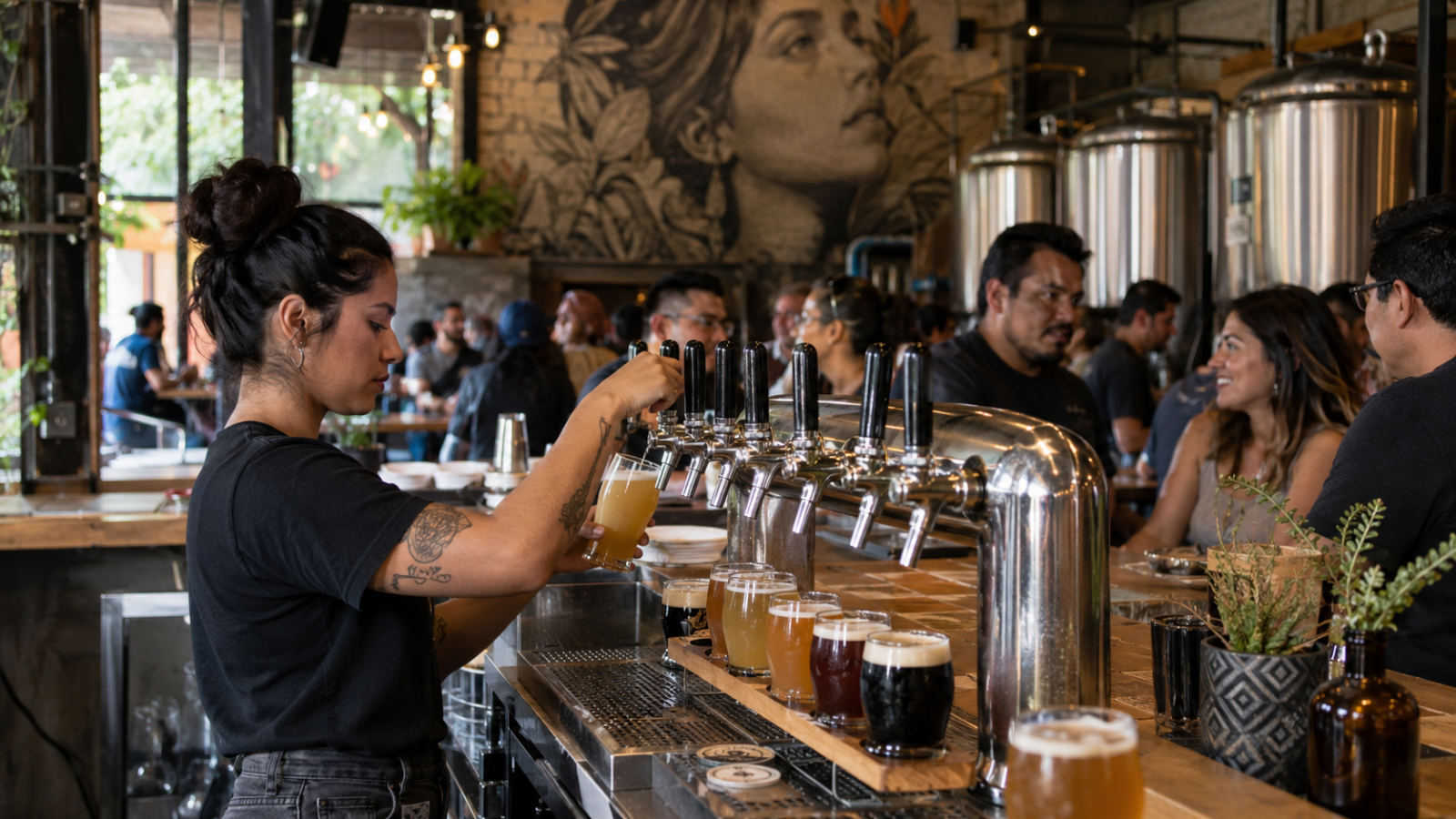
Across Baja California, Mexico City, Guadalajara, Monterrey and beyond, independent breweries are increasingly influencing what Mexican beer looks like, tastes like and who it is designed for.
Innovation Where Scale Cannot Always Move Quickly
The major breweries possess advantages that independents cannot realistically match: nationwide distribution, huge advertising budgets, established relationships with retailers and some of the country’s best-known consumer brands.
Independent breweries have responded by competing differently.
They are experimenting with IPAs, hazy beers, speciality lagers, seasonal releases, local ingredients and increasingly sophisticated packaging.
Perhaps more significantly, some are moving into categories that would once have seemed unusual territory for Mexican craft beer.
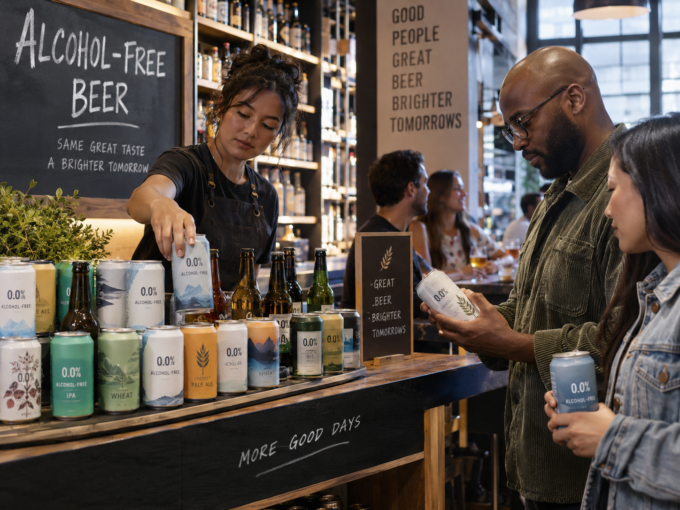
Cervecería de Colima, for example, has expanded into alcohol-free brewing with its Colima Cero range. The portfolio includes a 0.4% ABV Session IPA, Lager Ámbar and Lager, bringing craft-style positioning into one of the fastest-changing parts of the international beer business.
That tells us something important about the development of Mexico’s independent sector.
Craft beer is no longer simply about producing stronger, hoppier alternatives to mainstream lager.
It is becoming a broader innovation platform.
A Small Share With Bigger Ambitions
Independent beer still represents only a fraction of Mexico’s total volume.
Recent industry reporting puts strictly craft production at below 1% of national beer volume, although broader estimates that include all producers outside the two dominant groups can reach closer to 3%.
The gap is enormous.
But there are signs of continued momentum.
Mexican craft breweries including Minerva, Colima, Wendlandt, Insurgente, Allende, Fausto and others have been targeting production growth during 2026, with the FIFA World Cup expected to give bars, restaurants and specialist retailers another opportunity to introduce consumers to independent beer. Sector participants have talked about production growth of around 12% this year.
For independents, the World Cup represents more than additional tourism.
It is exposure.
Millions of consumers will encounter Mexico through hospitality, food and drink. Craft breweries have an opportunity to present a different side of Mexican beer alongside the industrial brands already recognised worldwide.
The Challenge Is Distribution
Making interesting beer is only part of the equation.
Getting it into consumers’ hands remains much harder.
Mexico has a long history of highly concentrated beer distribution. While competition rules have evolved and major retailers increasingly offer broader portfolios, the economics of nationwide distribution still strongly favour scale.
Independent breweries must also contend with expensive packaging and imported ingredients.
More than 90% of the hops used by Mexican craft brewers are imported, according to industry representatives, leaving smaller producers exposed to exchange rates and international supply costs.
Direct sales, taprooms, specialist retailers and hospitality therefore remain particularly important.
These channels allow independents to tell a story that is difficult to communicate on a supermarket shelf alone.
Mexico’s Beer Market Is Becoming More Sophisticated
The most interesting question is not whether independent breweries will overthrow Modelo and Heineken.
They will not — at least not in any foreseeable future.
The more realistic question is whether independents can influence the direction of the wider market.
That is already happening.
Consumers are being exposed to more beer styles, better packaging, local identities, alcohol-free craft options and breweries built around community rather than mass-market advertising.
Cervecería de Colima’s director recently described Mexico’s independent sector as becoming more diverse and sophisticated, with significant room for further innovation.
And that may ultimately be the independent sector’s greatest impact.
Mexico will remain a country of beer giants.
But underneath them, a much more colourful ecosystem is developing.
The duopoly still controls the volume.
The independents are increasingly shaping the conversation.






Leave a comment