
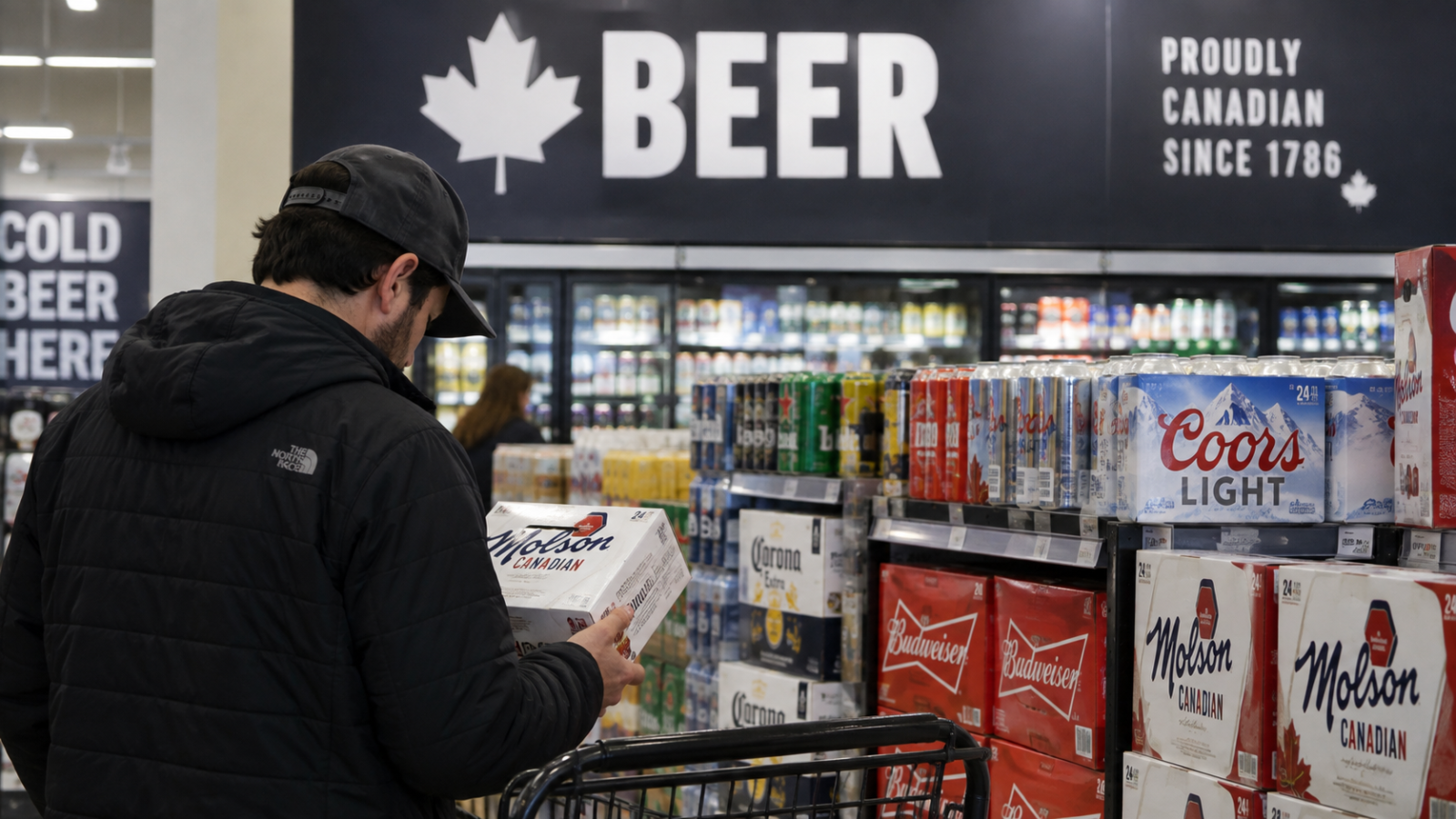
Standfirst: Canada remains one of the world’s established beer markets, but the latest figures reveal a category under sustained pressure. Beer volumes fell another 3.8% in 2024/25, extending an unprecedented run of decline — even as beer remains the country’s biggest alcoholic drinks category.
Canada’s beer market has just reached an uncomfortable milestone.
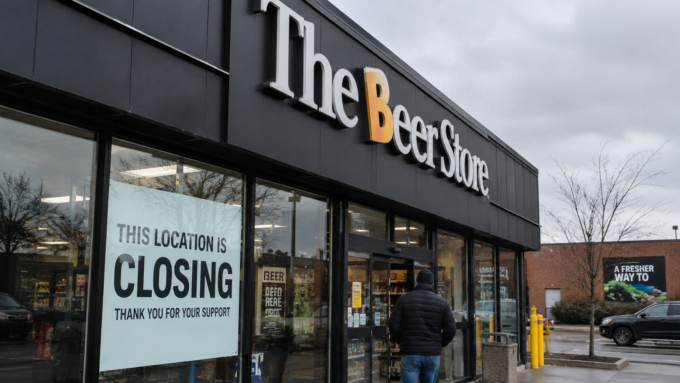
Beer sales by volume declined for the ninth consecutive year in the 2024/25 fiscal year, according to new Statistics Canada data, raising fresh questions about how permanently Canadian drinking habits are changing.
Total beer sales fell 3.8% to 1.876 billion litres, following an even steeper 4.5% contraction the previous year.
This is no temporary post-pandemic correction.
It is a long-running structural shift.
Canadians Are Simply Buying Less Beer
The clearest illustration comes from consumption per legal-drinking-age adult.
Beer sales in 2024/25 were equivalent to approximately 3.1 standard bottles per person per week.
Before the pandemic, in 2019/20, the equivalent figure was around four bottles a week.
That is a significant change in a relatively short period.
Beer is not alone. Total alcohol volumes across Canada fell 3% during 2024/25, marking the fourth consecutive annual decline for beverage alcohol overall.
But beer has been moving in this direction for considerably longer.
Moderation, changing social habits, competition from alternative drinks and a younger generation with a less predictable relationship with alcohol are all reshaping the occasions in which beer traditionally dominated.
Beer Is Still Number One
Declining volume should not be confused with irrelevance.
Beer remains Canada’s largest alcoholic beverage category, accounting for 35.1% of total alcohol sales value during 2024/25.
Canadian retailers, liquor stores and agencies sold approximately C$9.1 billion of beer, although that was 1.6% lower than the previous year.
Wine represented 29.7% of alcohol sales and spirits 25.8%, while cider, coolers and other refreshment beverages increased their share to 9.3%.
So beer remains comfortably at the centre of Canadian drinking culture.
The difficulty is that the market is getting smaller.
Canadian Beer Still Has a Powerful Home Advantage
One striking feature of the market is the strength of domestic production.
Canadian-made products represented 88.7% of beer sales during 2024/25 — significantly higher than domestic shares in wine and spirits.
That makes Canada unusual from an import perspective.
International brands are competing not only against multinational brewing groups but also against a deeply established domestic brewing ecosystem.
For imported beer, differentiation therefore becomes essential.
Simply being foreign is no longer enough.
Imported brands need a clear price position, recognisable identity, strong distributor relationships or a proposition that fills a genuine gap in the market.
The Industry Is Also Consolidating
Pressure is visible beyond sales figures.
Beer Canada’s industry data shows the number of Canadian breweries declined by around 1.5%, while breweries per capita fell 4.9%. Domestic beer production also decreased.
After years of rapid craft-brewery expansion, parts of the Canadian industry are moving into a period where profitability and sustainable distribution matter more than simply adding new breweries.
That does not mean innovation is disappearing.
Quite the opposite.
Less Beer Could Mean Different Beer
The global beer industry is increasingly discovering that declining overall consumption does not necessarily eliminate growth opportunities.
Premium beer and particularly no-alcohol beer continue to outperform the wider category internationally. IWSR says no-alcohol beer volumes increased 8% across its leading markets in 2025, while overall beer volumes declined. Canada is among the major markets where no/low alcohol has been developing strongly.
That may offer a clue to Canada’s next chapter.
The market is unlikely to return automatically to the consumption levels of a decade ago.
Instead, breweries may need to compete for fewer but more valuable occasions — through premium products, alcohol-free beer, distinctive craft propositions and brands that offer consumers more than simple refreshment.
Nine consecutive years of declining volume sends a clear message.
Canada has not stopped drinking beer. But the way Canadians choose beer — and how often they choose it — is changing fast.










Leave a comment