
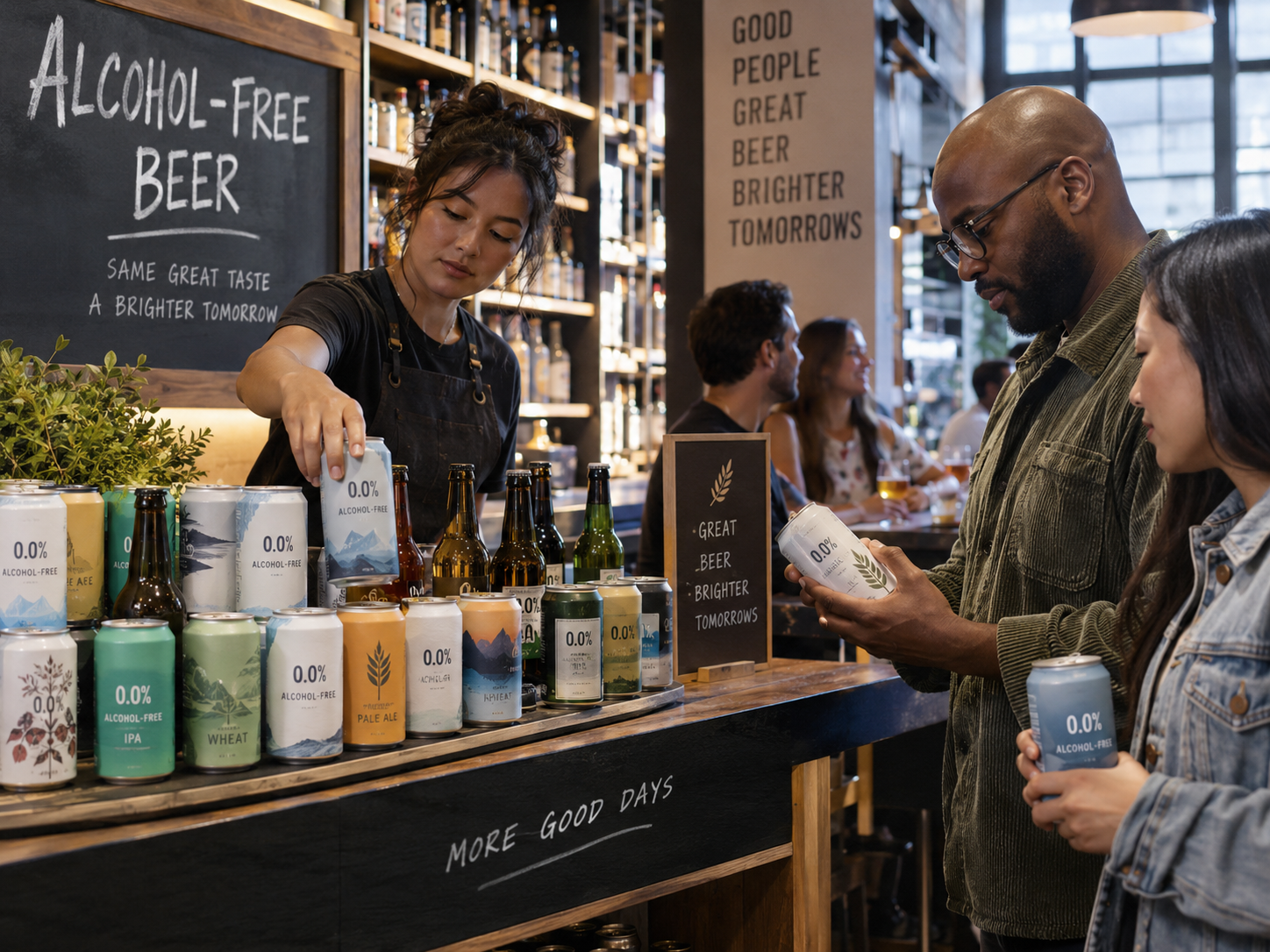
Standfirst: While conventional beer volumes continue to decline across the United States, alcohol-free beer is moving rapidly in the opposite direction. Dedicated challengers, craft brewers and the world’s largest beer companies are now competing for a category that is becoming too important to ignore.
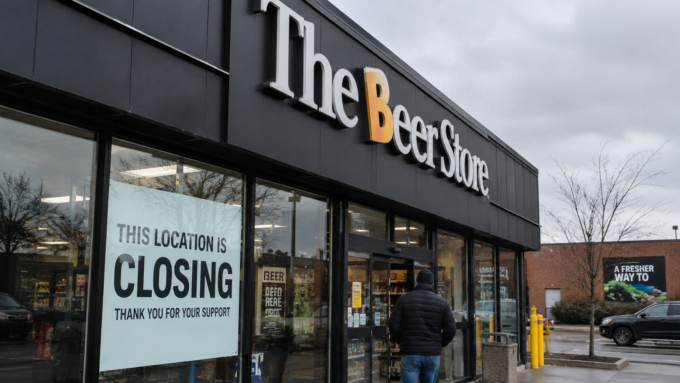
The U.S. beer market is shrinking — but one part of it is growing fast enough to change the competitive landscape.
Alcoholic beer volumes fell around 6% in 2025, according to IWSR. During the same period, no-alcohol beer grew by approximately 15%.
That contrast is becoming impossible for brewers to overlook.
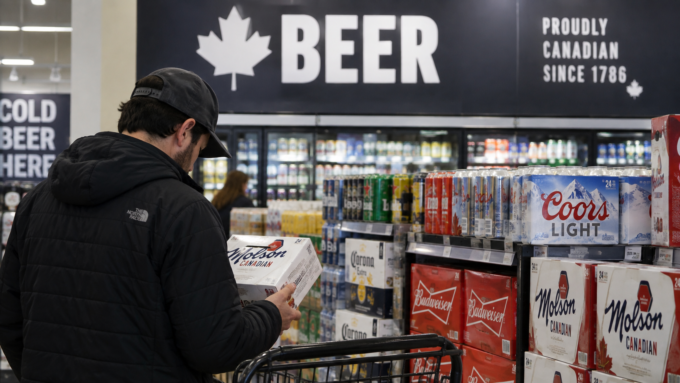
Just a few years ago, alcohol-free beer occupied a relatively small corner of the American beer aisle. Today, multinational brewers, major craft producers and specialist alcohol-free companies are fighting for space in supermarkets, bars, sports venues and convenience stores.
And the consumer is changing with them.
From Alternative Product to Mainstream Occasion
The biggest shift is that alcohol-free beer is no longer being driven only by people who have stopped drinking completely.
Many consumers are alternating between alcoholic and alcohol-free products depending on the occasion.
IWSR says the category is increasingly becoming a year-round purchase rather than something concentrated around Dry January, with moderation becoming part of normal drinking behaviour.
That opens beer up to occasions where conventional alcohol might previously have been excluded: weekday lunches, driving, sport, fitness, work events and evenings where consumers simply want to drink less.
For breweries, that is potentially more valuable than simply replacing one alcoholic beer with an alcohol-free equivalent.
It creates additional drinking occasions.
The Specialists Have Forced the Giants to Respond
One of the most important names in the American category is Athletic Brewing.
Rather than treating non-alcoholic beer as an extension of an existing beer brand, Athletic built its business around the category itself.
That strategy has helped make it the leading alcohol-free beer brand family in the U.S., while also demonstrating that consumers will pay premium prices for products built specifically around taste, lifestyle and modern branding.
The response from the major brewers has been aggressive.
Heineken 0.0 has established itself as one of the strongest individual alcohol-free beer brands in America, while Anheuser-Busch now competes through products including Michelob ULTRA Zero, Budweiser Zero and Busch NA.
Michelob ULTRA Zero has already emerged as a major volume player following its 2025 launch.
That matters because alcohol-free beer is no longer a competition between niche brands.
It is becoming a fight between specialists, craft brewers and global brewing groups.
Craft Beer Wants a Share Too
America’s craft breweries are also moving quickly.
According to the Brewers Association, the number of non-alcoholic brands tracked by NIQ increased from 173 in 2021 to 484 in 2025.
Craft accounted for around 31% of non-alcoholic volume and 36% of dollar sales in 2025 — significantly above craft beer’s share of the wider beer category.
That tells an important story.
Consumers appear willing to experiment with alcohol-free IPA, lager, wheat beer and other styles rather than viewing the category purely as a substitute for mainstream lager.
For craft breweries facing declining conventional beer sales, alcohol-free products provide access to one of the few areas of the U.S. beer business still delivering strong organic growth.
Small Category, Big Expectations
Alcohol-free beer is still relatively small compared with conventional beer.
But its direction is very different.
IWSR expects the wider U.S. no-alcohol market to expand at an 18% volume compound annual growth rate between 2024 and 2028, with the total category approaching $5 billion by 2028. Beer remains its primary volume driver.
That growth is attracting more products, more marketing money and more competition for retail space.
The challenge now changes.
Being alcohol-free is no longer enough.
Consumers increasingly expect strong branding, genuine beer flavour, variety and a product they are comfortable carrying into the same social settings as conventional beer.
The winners will therefore not necessarily be the companies capable of producing the lowest-alcohol product.
They will be those capable of making alcohol-free beer feel like beer consumers actually want to choose.
The wider U.S. beer industry may still be contracting.
But inside that decline, a new competitive category is being built — and every major brewer now has a reason to be part of it.er is the aggregation of lager, dark beer, stout and non/low alcohol beer.




Leave a comment